Soft Lazy Wave Chevron Crochet Blanket Free Pattern Tutorial
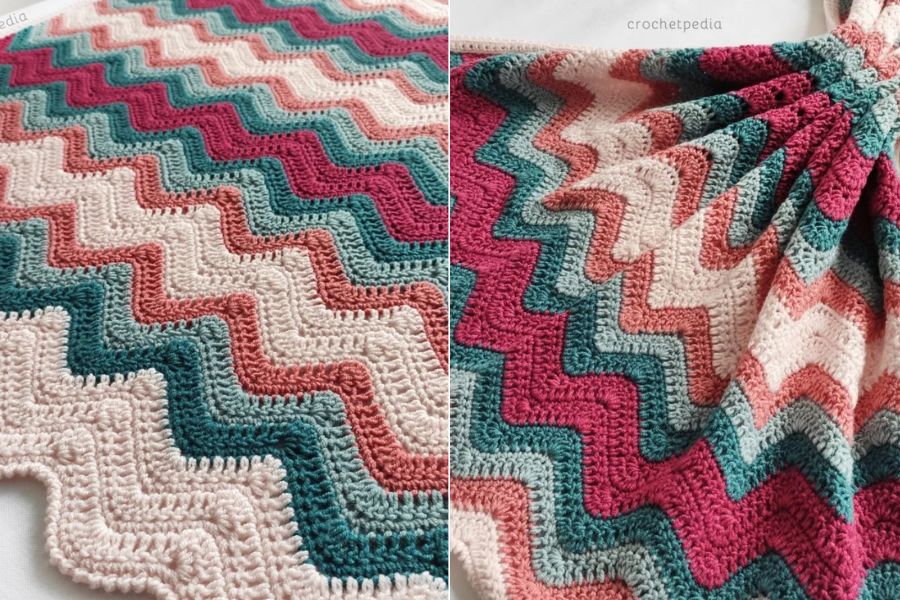
Imagine wrapping a little one in gentle ocean waves made of soft, cozy yarn. This charming chevron blanket brings a calm, playful rhythm to nap time and stroller rides.
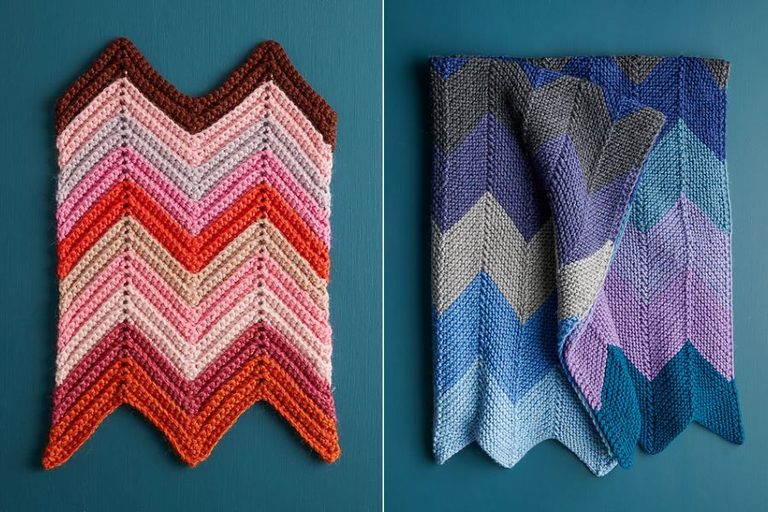
With soft blush pinks, deep berry tones, misty teals, and creamy neutrals, the wavy stripes look lovely from every angle. It is a rewarding project that feels light, squishy, and welcoming in your hands.
Materials and Tools Needed
You will use Drops Baby Merino yarn in shades #26, #47, #46, #43, #41, and #30 with one skein of each color. You will also need two skeins of color #44, using about 280 grams of wool in total.
- Yarn: Drops Baby Merino in colors #26, #47, #46, #43, #41, #30 (1 skein each) and #44 (2 skeins), totaling around 280g.
- Hook: A 4 mm crochet hook works nicely with this soft merino wool.
- Tools: Keep a pair of scissors nearby, and grab a yarn needle if you like weaving in ends that way.
If you pick a different yarn weight, remember to match it with the right hook size for that yarn. Changing your yarn weight or hook will also change the final size of your blanket.
Finished Size and Gauge Details
When made as written, the finished blanket measures about 66 x 83 cm (26 x 33 inches). This cozy size works wonderfully for babies, tummy time, or quick outings in the pram.
In the wave stitch pattern across rows 3 and 4, one repeat measured between two valley tips is about 7.5 cm (3 inches). Four modules, which equal eight rows total, measure about 9 cm (3.5 inches) in height.
Making a small test swatch helps you see how your stitches flow before you start the main blanket. If your stitches feel tight, try moving up a hook size so the waves stay soft and relaxed.
Stitches and Abbreviations Guide
This pattern uses clear, everyday stitch abbreviations so you can keep track of your rows easily. Here are the key terms and stitches you will see as you crochet:
- ch: chain stitch, used to start your foundation and make turning chains.
- sl st: slip stitch, a tiny join stitch used for neat transitions.
- sc: single crochet, a tidy stitch that creates firm, gentle texture.
- dc: double crochet, a taller stitch that builds height along the waves.
- dc5tog: decrease using five double crochets, which pulls stitches together to shape the valleys.
- st: stitch, referring to a single completed crochet stitch.
- crab stitch: reverse single crochet, worked backward to give edges a neat rope-like trim.
- front post single crochet: a single crochet worked around the post of a stitch to add raised detail.
- back loop only single crochet: a single crochet worked through only the back loop of a stitch for subtle ridges.
- C1, C2, C3, etc.: shorthand for color 1, color 2, color 3, and so on.
How to Crochet the Lazy Wave and Borders
You crochet the main body of this blanket in flat rows so the gentle waves build steadily from one end to the other. The repeatable module uses 16 stitches, and your starting chain should be a multiple of 16 plus 1.
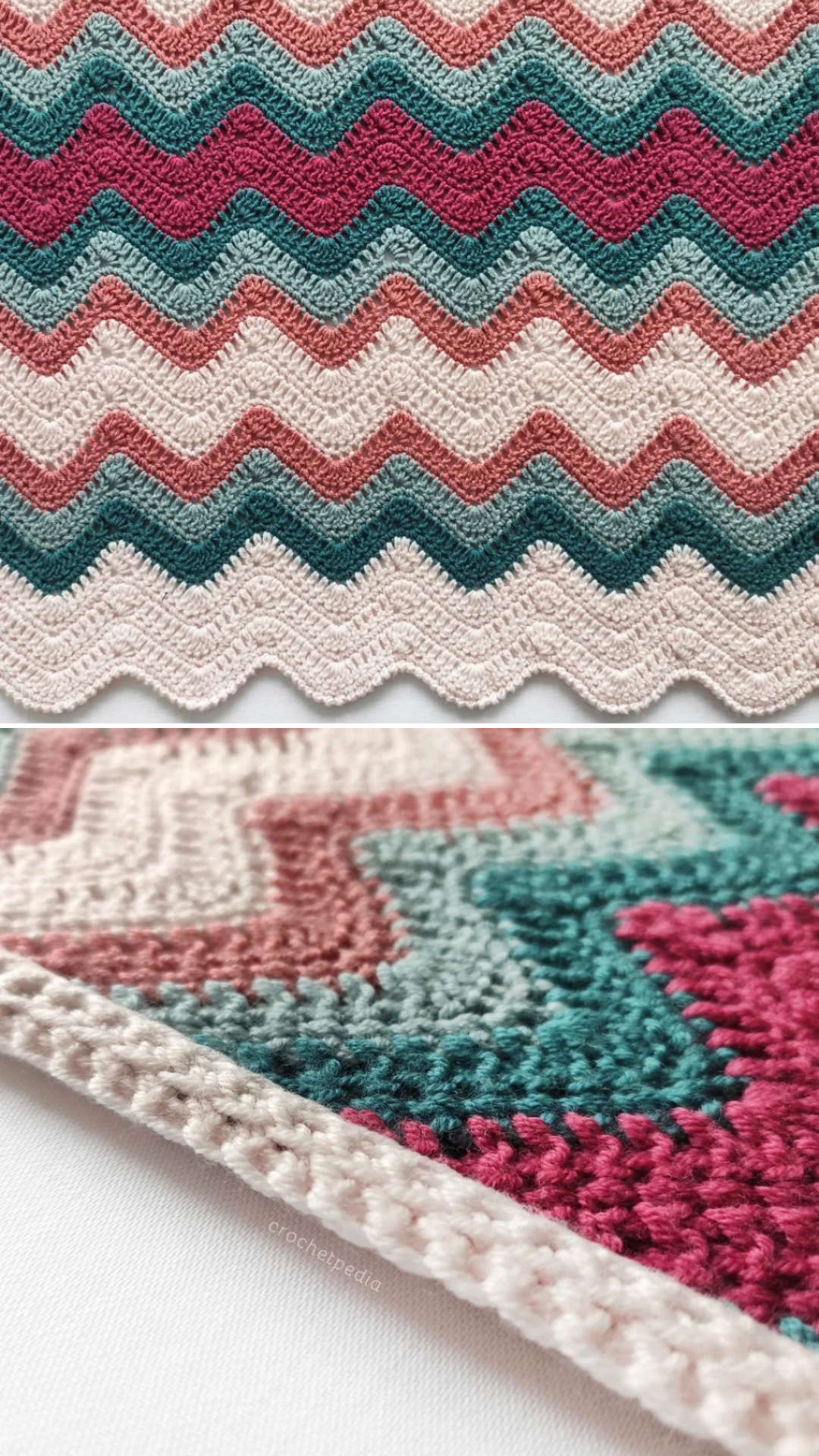
After finishing the wavy rows, you finish the top and bottom edges using the crab stitch for a crisp border. Finally, you add the right and left borders so the whole blanket looks neat and complete.
Keep your starting chain and rows relaxed because this wave stitch does not like tight crocheting. A relaxed hand lets the peaks and valleys curve smoothly without pulling the fabric tight.
Pay close attention to your turning chains at the start of each round or row so your stitch count stays accurate. Three chains at the start of a double crochet section count as a stitch, while one chain at the start of a single crochet section does not count as a stitch.
Easy Ways to Adjust Size
You can easily make this blanket wider by adding 16 stitches, or another multiple of 16, to your starting chain. If you want a narrower blanket, simply subtract 16 stitches or a multiple of 16 from the foundation chain count.
Changing the length is just as simple because you only need to crochet more or fewer rows. Add extra rows for a longer cover, or work fewer rows for a smaller baby blanket.
Always count your stitches across a few repeats early on so your sizing adjustments stay on track. Catching an extra or missed stitch early saves you time later in the project.
Helpful Tips for Smooth Crocheting
Take breaks when your hands feel tired so your tension stays even from the first row to the last. Even tension is the secret behind crisp waves that do not bunch up or flare out.
When switching colors from C1 to C2 and beyond, leave tails long enough to secure cleanly later. Changing shades creates those lively horizontal waves, so keeping your color order organized makes the process relaxing.
Try the crab stitch on a small practice strip first if working backward feels unfamiliar. Once you get the rhythm of moving left to right, the reverse single crochet edge adds a lovely finishing touch.
Keep your yarn ball in a bowl or basket so it rolls freely without tangling under your chair. A tangle-free workspace makes evening crochet sessions much calmer and more enjoyable.